



In recent years, ketamine therapy has moved from a fringe experimental treatment to one of the most talked-about breakthroughs in mental health care. Once known primarily as an anesthetic, ketamine is now being used in clinics worldwide to treat depression—especially in patients who have not responded to traditional therapies.
So why is this shift happening now?
The answer lies in a powerful combination of scientific breakthroughs, unmet clinical needs, and real-world patient outcomes. This article explores the key reasons behind the growing demand for ketamine therapy, backed by the latest research and data.
The Crisis in Depression Treatment
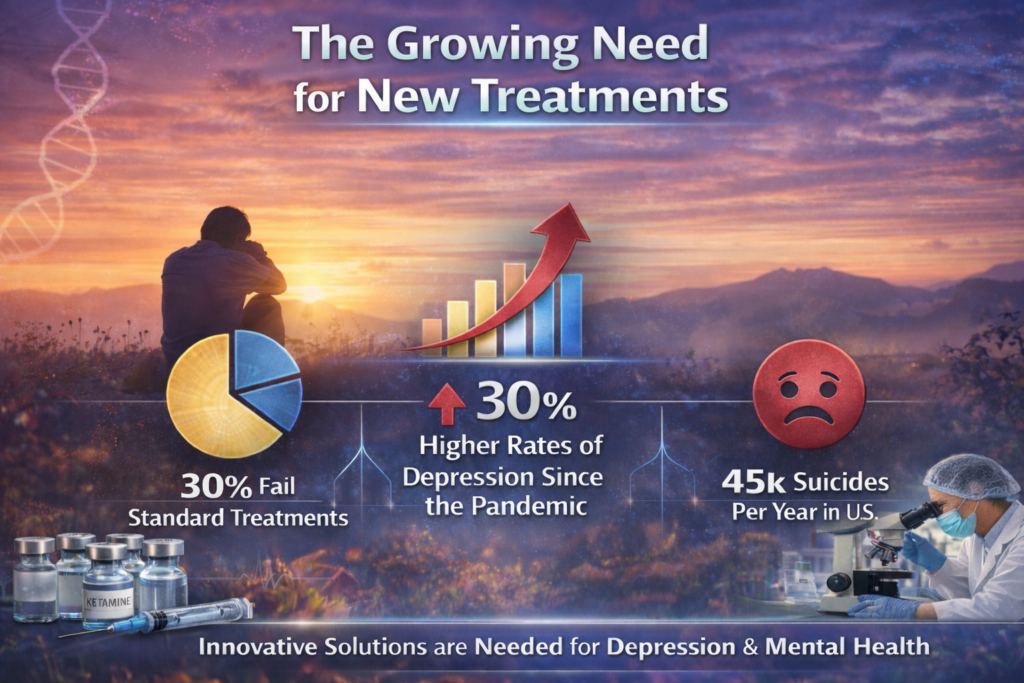
Depression is one of the leading causes of disability worldwide, yet current treatments often fall short.
- Around 30% of patients with major depressive disorder do not respond to standard antidepressants ()
- Traditional medications like SSRIs can take weeks to show effects, leaving patients vulnerable during that delay
For individuals with treatment-resistant depression (TRD), this creates a cycle of trial-and-error medications, often with limited success.
This gap in care is one of the biggest drivers behind the rise of ketamine therapy.
1. Rapid Relief Unlike Traditional Antidepressants
One of the most compelling reasons people are turning to ketamine is its speed.
Unlike conventional antidepressants, ketamine can:
- Reduce depressive symptoms within hours to days
- Provide relief even in severe, resistant cases
Clinical research consistently shows that low-dose ketamine produces rapid antidepressant effects, even in patients who have failed multiple treatments ()
This is particularly critical for patients experiencing:
- Suicidal thoughts
- Severe emotional distress
- Acute depressive episodes
In many cases, ketamine acts as a “reset button” for the brain, offering immediate stabilization when it’s needed most.
2. Effectiveness in Treatment-Resistant Depression
Ketamine’s rise is closely tied to its success in treating patients who have exhausted other options.
A 2026 systematic review highlights that:
- Ketamine shows strong efficacy in treatment-resistant depression
- It works through glutamate modulation, a completely different pathway than traditional antidepressants ()
This is significant because it represents a new class of antidepressant action, not just an incremental improvement.
For many patients, ketamine is not just another option—it’s the first treatment that actually works after years of failure.
3. A Completely New Mechanism of Action
Most antidepressants target serotonin. Ketamine, however, works on the glutamate system, which is responsible for:
- Brain plasticity
- Learning and memory
- Neural connectivity
Research shows that ketamine:
- Enhances synaptic connections
- Promotes rapid neural repair
- Improves communication between brain regions
This biological difference is a major reason why ketamine is seen as a breakthrough rather than a variation of existing treatments.
4. Growing Clinical Adoption and Accessibility
Another major factor behind ketamine’s popularity is increased availability.
- Specialized ketamine clinics are rapidly expanding worldwide
- Ketamine-derived treatments (like nasal sprays) have received regulatory approvals
- Medical communities are increasingly recognizing its role in depression care
A 2025 scoping review found that ketamine is now widely used across psychiatric settings, particularly for depression and related disorders ()
This shift has made treatment more accessible to patients who previously had no viable alternatives.
5. Real-World Patient Demand and Success Stories
Beyond clinical data, patient experiences are driving awareness and adoption.
Many individuals report:
- Reduced suicidal ideation
- Improved emotional stability
- Enhanced quality of life
Recent reports highlight that patients often describe ketamine therapy as giving them a “second chance at life”, particularly after years of unsuccessful treatments ()
This kind of emotional impact fuels:
- Word-of-mouth growth
- Social media discussions
- Increased demand for providers
6. Expansion Beyond Depression (PTSD, Anxiety, Pain)
Ketamine’s benefits are not limited to depression.
Research shows effectiveness in:
- PTSD
- Anxiety disorders
- Chronic pain conditions
Because these conditions often overlap, ketamine’s multi-condition impact makes it especially appealing for complex cases.
Patients dealing with both depression and PTSD, for example, may experience improvements in multiple symptoms simultaneously, increasing its perceived value.
7. Innovation in Mental Health Treatment
Ketamine is part of a broader shift toward next-generation psychiatry, which includes:
- Psychedelic-assisted therapies
- Personalized medicine
- Brain-based treatment approaches
Researchers are now exploring:
- Longer-lasting ketamine formulations
- Combination therapies with psychotherapy
- Biomarkers to predict patient response
A 2025 study even suggests that new approaches could extend ketamine’s effects from one week to several months, improving long-term outcomes ()
This ongoing innovation is attracting both patients and clinicians to the field.
8. Limitations—and Why Demand Still Grows
Despite its benefits, ketamine is not perfect.
Challenges include:
- Effects may be short-lived without maintenance therapy
- Potential side effects (dissociation, blood pressure changes)
- Risk of misuse outside clinical settings ()
However, for many patients, the benefits outweigh the risks—especially when treatment is conducted under medical supervision.
In fact, these limitations have not slowed adoption; instead, they have driven:
- Better clinical protocols
- Safer delivery methods
- More structured treatment programs
The Bottom Line: Why Ketamine Is Gaining Momentum
The growing popularity of ketamine therapy is not a trend—it’s a response to a real and urgent gap in mental health care.
Key reasons people are turning to ketamine:
- Fast-acting relief when time matters most
- Effectiveness in treatment-resistant cases
- New science targeting the brain differently
- Increasing availability and awareness
- Powerful real-world patient outcomes
As research continues to evolve, ketamine is increasingly seen as a cornerstone of modern mental health treatment, not just an alternative.
Final Thoughts
Ketamine therapy represents a fundamental shift in how we understand and treat depression. For millions of people who have struggled with ineffective treatments, it offers something rare in mental health care: hope backed by science.
While it is not a cure-all, its rapid effects, unique mechanism, and expanding clinical use make it one of the most important developments in psychiatry today.
