


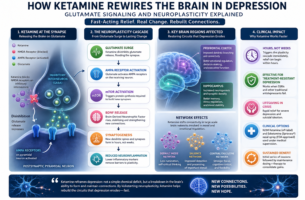
The Neuroscience Behind Ketamine’s Fast-Acting Antidepressant Effect Depression has long been framed as a chemical shortage of serotonin and dopamine. Ketamine’s fast, striking effect on treatment-resistant depression pointed researchers toward a different system entirely: glutamate, the brain’s main excitatory messenger, and the synapses it builds. FIG. 1. Simplified schematic of ketamine’s action at the glutamatergic […]
Read More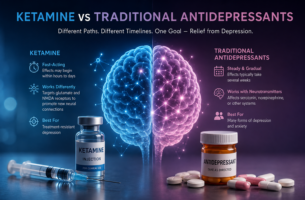
Ketamine vs antidepressants is no longer a question limited to research laboratories. As ketamine-based treatments have moved into mainstream mental health discussions, more people with depression are asking how ketamine compares with familiar medications such as SSRIs and SNRIs. The biggest difference is not simply how strong one treatment is compared with another. Ketamine and […]
Read More
Ketamine therapy has rapidly become one of the most talked-about innovations in mental health treatment. For individuals living with treatment-resistant depression, PTSD, anxiety disorders, OCD, chronic pain, and other complex conditions, ketamine has offered hope when traditional medications have failed. However, one question consistently comes up before treatment begins: Does insurance cover ketamine therapy? The […]
Read More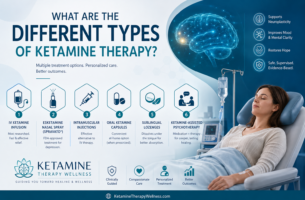
Mental health treatment has evolved dramatically over the past decade, and ketamine therapy has emerged as one of the most promising breakthroughs for people living with depression, anxiety, PTSD, chronic pain, and other treatment-resistant conditions. Unlike traditional antidepressants that may take weeks or even months to become effective, ketamine works on entirely different brain pathways […]
Read More
Mental health treatment has evolved significantly over the past decade, and ketamine therapy has emerged as one of the most promising options for individuals living with treatment-resistant depression, anxiety disorders, PTSD, OCD, and certain chronic pain conditions. As demand continues to grow, Chicago has become one of the Midwest’s leading destinations for evidence-based ketamine care, […]
Read More
Chronic pain affects millions of people worldwide, making even the simplest daily activities difficult. Whether it’s persistent back pain, nerve damage, fibromyalgia, or Complex Regional Pain Syndrome (CRPS), living with pain for months or years can impact physical health, emotional well-being, sleep, work, and relationships. While conventional treatments such as pain medications, physical therapy, injections, […]
Read More
For millions of people living with depression, taking an antidepressant is often the first step toward recovery. While these medications help many individuals regain emotional balance, they do not work for everyone. In fact, a significant number of people continue to experience persistent symptoms even after trying multiple antidepressants, different dosages, or combinations of medication […]
Read More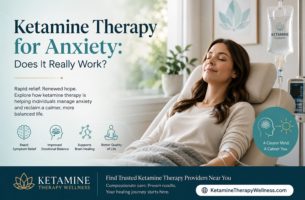
Millions of people live with anxiety every day. While traditional treatments such as medication and psychotherapy help many individuals, others continue to struggle despite trying multiple approaches. This has led researchers and healthcare providers to explore innovative therapies—including ketamine treatment. But does ketamine therapy really work for anxiety? The short answer is yes—for many patients, […]
Read More
Mental health care is evolving rapidly, and nowhere is this transformation more evident than in the Chicago metropolitan area. As more people seek alternatives to traditional medications and psychotherapy alone, ketamine therapy has emerged as one of the most promising innovations for individuals struggling with depression, anxiety disorders, PTSD, and chronic mental health challenges. The […]
Read More
As rapid-acting depression treatments continue to transform mental healthcare, patients are increasingly faced with an important question: Should they choose IV ketamine therapy or esketamine nasal spray? While both treatments stem from the same scientific foundation, they differ significantly in delivery method, treatment experience, accessibility, and clinical flexibility. Understanding these differences can help patients and […]
Read More